
The Beautiful Game
Reviving a short-lived, early love

It will likely surprise no one for me to confess that I have never played team sports or been very interested in them. Well, I say never—but I do have one warm memory of playing on a YMCA soccer team when I was about five years old. I do not know how long I played or if I was any good, but I know I loved it. And my warm memory of soccer—and the main reason I loved it—was because of my coach, an African man (I do not know which country he was from) named Tuesday. Coach Tuesday drove us hard, but we laughed and had fun, and we all wanted to make him proud. He taught us about Pelé, the great Brazilian champion whose creative, artful style of play astounded us all. Pelé is credited with popularizing the phrase “Jogo Bonito,” translated as “The Beautiful Game,” to describe this seemingly simple, international game1
My soccer career was pretty short-lived. I believe my fate was sealed when I was hit in the face with a soccer ball during practice, but that memory is pretty foggy. Like taking tap dancing, ballet, and piano lessons, playing soccer became just one of the many things that I briefly enjoyed as a child and then lost interest in.
I think one reason I have rarely had any interest in sports, besides not being athletically inclined myself, is that the major emphasis at my large (4,000-student) high school was (American) football. And as in many American high schools, this sport (and its players and cheerleaders) was part of a hierarchical, elitist structure that led to bullying and lots of other unpleasantness (of course, this was not the way of all the players, but even the coaches could be this way).

After high school, I went to a small Christian college in Georgia, and although their main sport was soccer (we were too small for American football), I just never really got into it because of the punk-rock resistance to the kind of ethos and attitude I had attached to mainstream sports while in high school. In my (limited) perceptions, I saw most athletes as narrowly focused on their bodies, their sport, and their popularity— having no sensitivity to the world of the arts (which meant so much to me). Sometimes this proved true; sometimes it didn’t.
![The Beautiful Game – CD (Mini, Compilation, Stereo), 1996 [r504723] | Discogs](https://substackcdn.com/image/fetch/$s_!oHNZ!,f_auto,q_auto:good,fl_progressive:steep/https%3A%2F%2Fsubstack-post-media.s3.amazonaws.com%2Fpublic%2Fimages%2F976422c3-6fcd-4c8f-b044-ae5e155af948_600x600.jpeg "The Beautiful Game – CD (Mini, Compilation, Stereo), 1996 [r504723] | Discogs")
All of this is to say that I was shocked, confused, and fascinated when I visited England in 1996 and felt the excitement of a country proudly hosting UEFA Euro 1996 (The Euros), the most important European soccer tournament. The confusion came from the artful aesthetics accompanying the matches, including football-themed music by bands such as The Lightning Seeds, Blur, and New Order. I mean, I had prided myself on being “alternative,” and this was the kind of music I loved, so I experienced a sort of cognitive dissonance in seeing so many of my newfound “cool” English friends getting excited about soccer matches and listening to equally cool music about said soccer matches. I could not imagine the enforced machismo of American football games being tainted by music that was not afraid to be “artsy.”
As I fell in love with England, I fell in love with the CD compilation pictured above because it represented the complex joys of English culture—both traditional and “alternative.” And soccer, somehow, was a part of that. I still cannot get enough of “Three Lions,” the main song for Euro 1996 that laments England’s winning record for the thirty years leading up to this tournament.
A bit of football history: The song above repeats the phrase “It’s coming home” over and over. Although I have heard this phrase in regards to hopes for England’s win, I did not know the origin of it. But now I know that, although a version of football has been played for thousands of years, it became an official game with rules and regulations in London in 1863 with the formation of the Football Association.
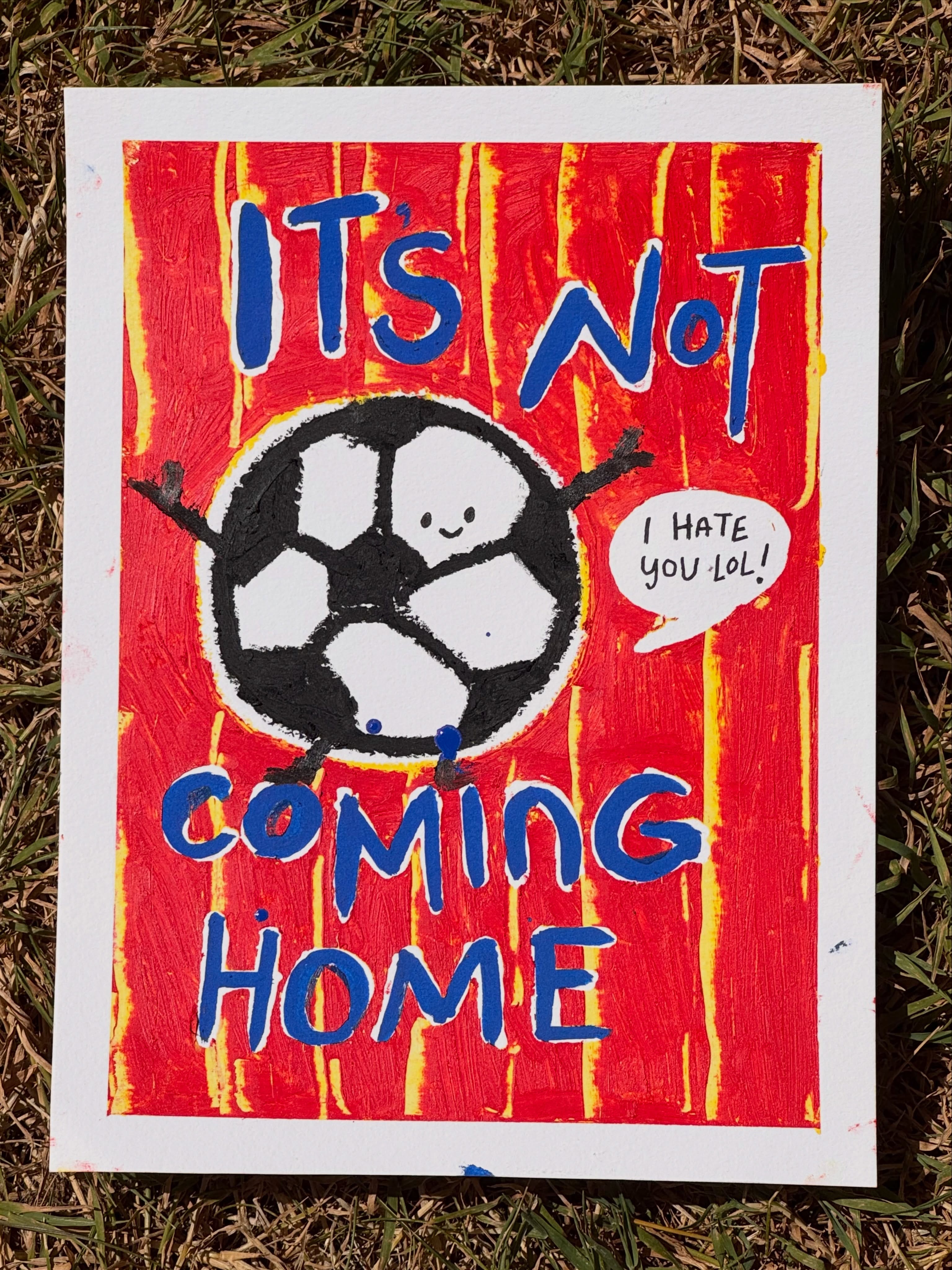
The official slogan of Euro 1996 (as sung in the song above) was “football comes home” because the last championship that had been won was the 1966 World Cup (England also hosted it). There is a certain legitimate “ownership” of modern football. There were high hopes for England to once again “bring home” football and a trophy. Sadly, it did not happen. It also did not happen this year.
When I moved to Newcastle-upon-Tyne in 2001, I was neighbors with one of the country’s most popular and successful football clubs, Newcastle United. Although still not a real football fan, I was fascinated by the culture of it, especially in the fanatically pro-team “toon” (what the locals call the town). If you were in the center of town on game day, you could hear the loud chants echoing from St. James Park. You could also witness a sort of contemporary “tribalism” that we so often so in sports, but especially in UK football—from cheerful fans to football “hooliganism.” I was fortunate enough to go see a match in 2002, one of the years when the Premiere League’s greatest goal-maker, Alan Shearer, was still playing for Newcastle. I have actually found a video of a portion of the 2002 match (Newcastle vs. West Ham) that I attended!
Attending a Newcastle United game (on the very top row— the players looked like ants!) was a fascinating socio-cultural experience. All large sports gathering have an interesting combination of a tribal and religious quality to them, and this is especially true in Newcastle, as the hometown team is the pride of the local “Geordie” people. The As we sat watching the game, the locals chanted for the Londoners to “Go back to France!”. The term “Geordie” describes both the very unique dialect (I think this is the most difficult accent in the UK to understand!) and the people group. Newcastle was a coal mining town, and the name “George” was common for the working class. It is fascinating that football began as a very working class game that everyone could play. Critics theorize that the fact that it has never been as popular in the United States is because it is so expensive for children to play and get training as it has middle and upper class connotations, unlike its very working class roots worldwide.
Although I was fascinated with the Geordie-team connection while I lived in Newcastle for grad school (2001-2006), I never really got into the sport, and I quickly forgot about it all when I moved back into the US.
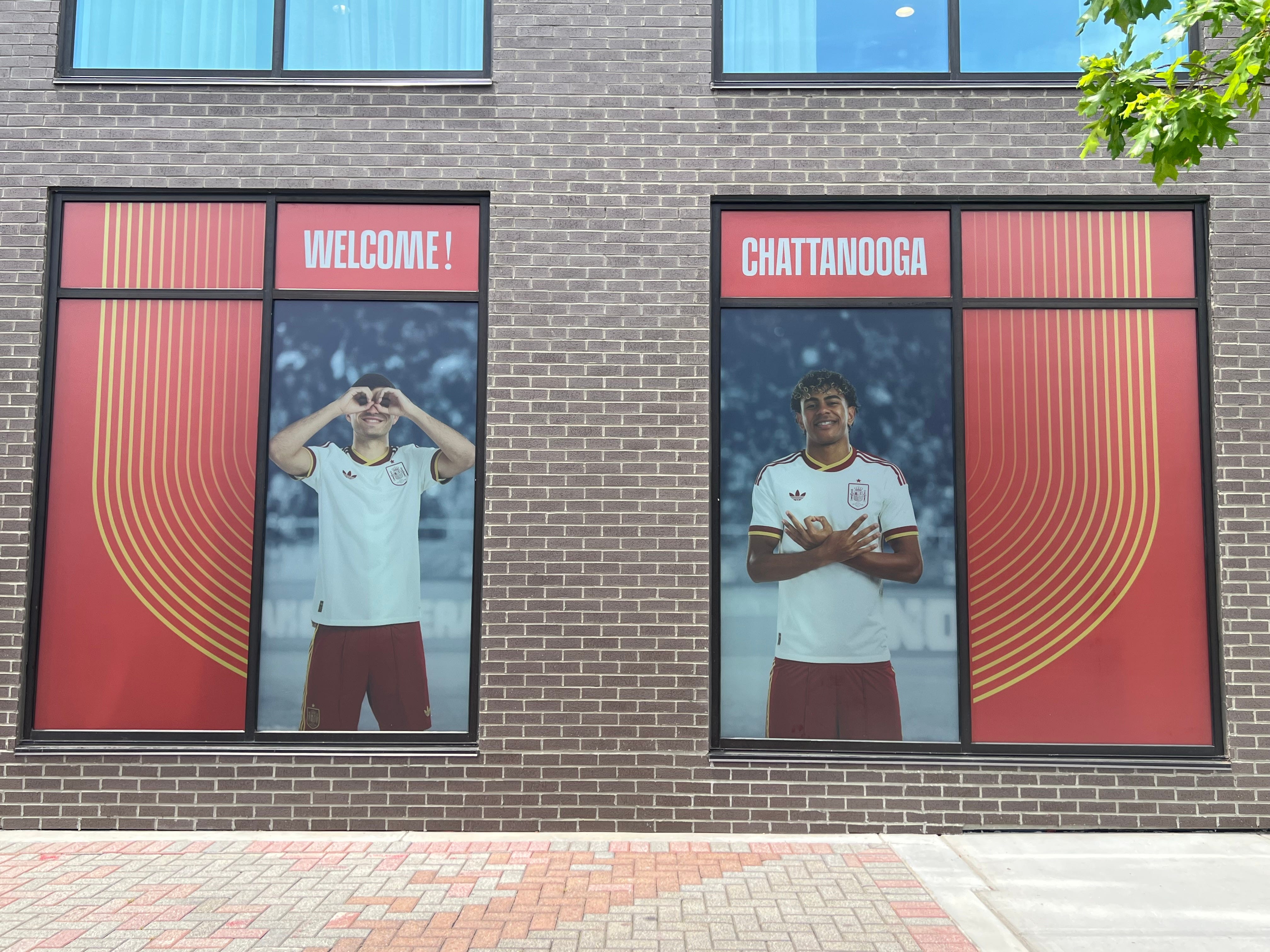
That is, until this summer when SPAIN MOVED ONTO MY STREET:
After learning the the Spanish National Team made Chattanooga their unlikely home base for the World Cup (literally a few blocks down on my street), I became fascinated with the team. I have long had a love for Spain after meeting many Spanish friends in Newcastle and then traveling to the country. After witnessing all of the local excitement over the arrival of this team, I began reading about the players and obsessively watching their Instagram posts to try and see Chattanooga through their eyes! Then I actually PAID to subscribe to Fox so that I could watch a game. I have never in my life watched a sporting event on my own, let alone paid for it. The more I read and watched, the more they became MY team.
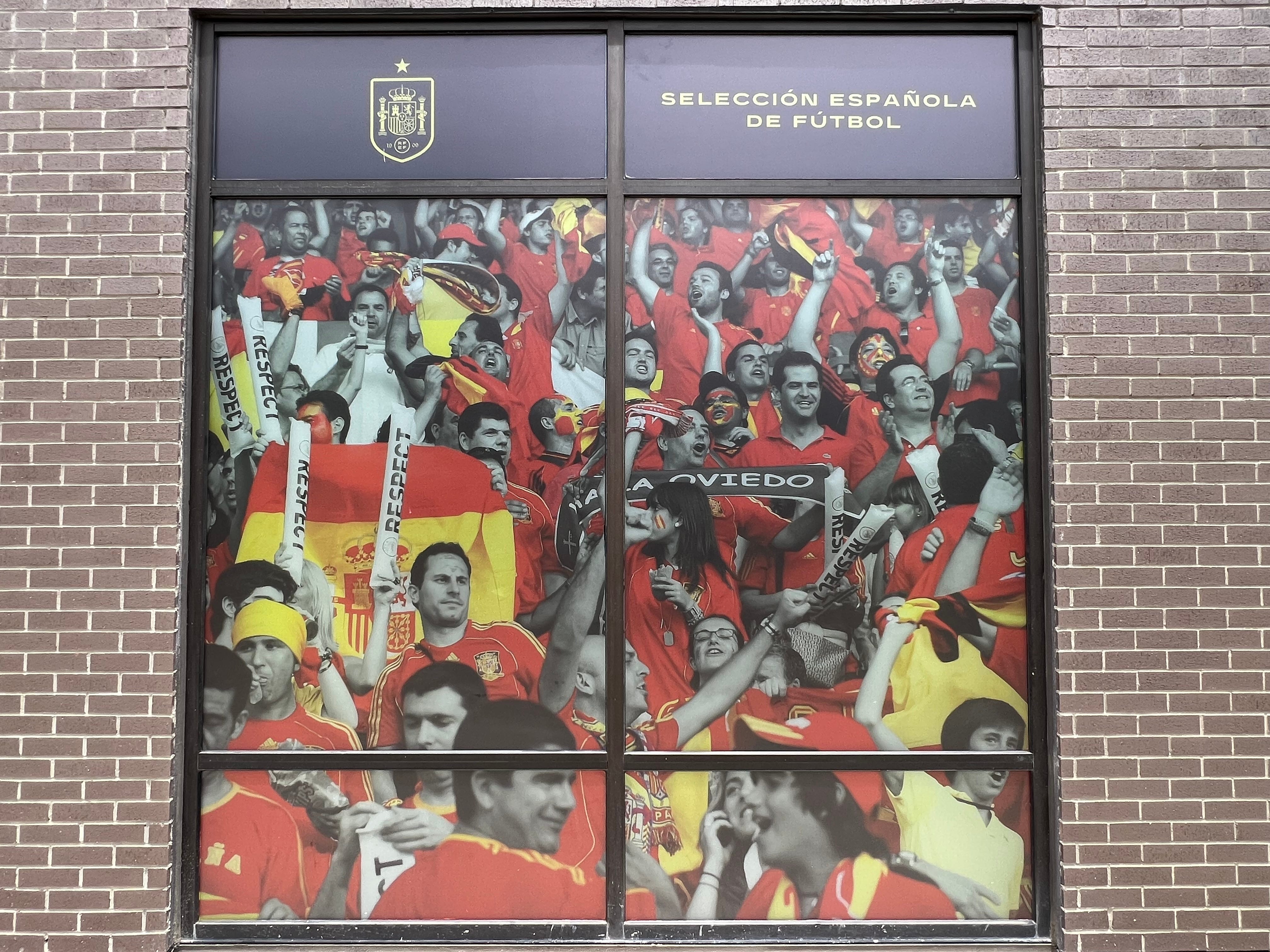
l saw that wunderkind Lamine Yamal was able to shop at the Fort Oglethorp Walmart and not really get recognized (I had only learned who he was myself when the team arrived on my street!). It was really fun to see what sort of scenes from Chattanooga the players and their accompanying media crew, doctors, nutritionists, etc. posted about the city. The team and their crew filled up an entire 285-person hotel that was then on a kind of lockdown with makeshift fences built around it. You can see fans at almost all hours standing outside the fences trying to get a glimpse.
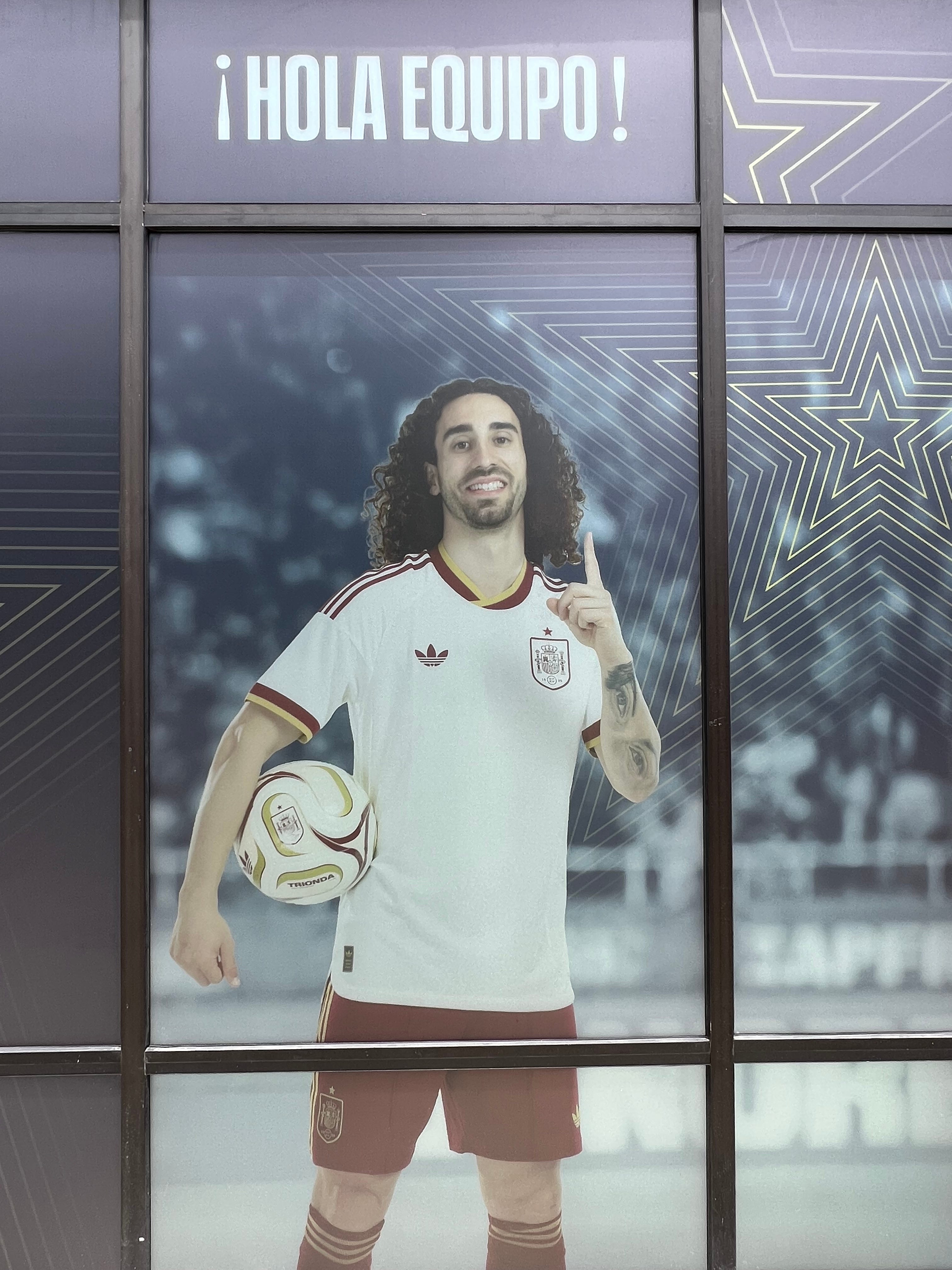
While reading about the players, I became intrigued not just with their athletic talents, but with their individual stories. And my favorite player to follow and read about was and is Marc Cucurella who now plays for Real Madrid (he formerly played for Chelsea FC). Cucurella has three children, and his oldest son is autistic. It is beautiful to see Marc’s tender-heartedness whenever he talks about his son. Although he weeps whenever he talks publicly about his child, he does it to raise awareness, and it is beautiful to see. He even went on the youtube show of Pau Brunett, a 12-year-old with autism who has became an internet star. When talking to Pau about his son, Matteo, he gets very emotional—taking notes about how to help his son. You can see the exchange in the video below with an English voiceover.
The Spanish team apparently really loved being here, so much so that they did not want to leave and hoped to keep Chattanooga as their base throughout the entire tournament, but FIFA said no. The Embassy Suites went above and beyond to accommodate them, as did Baylor High School, the elite private school that became the site for their training sessions. When the team left, it felt like the entire town was sad, including me. And I might have even shed a tear when they shared this video love letter to Chattanooga:
Although the Spanish team’s presence in Chattanooga was my gateway to the World Cup, I soon became fascinated with all aspects of the game and the event. Participating in watch parties as a fan and spending countless hours watching videos of international visitors discovering the USA (that’s a whole other large, exciting, endrearing topic!) that reminded me of the joy of living in an international community as I did in the UK. It’s so easy to feel as if the US is the world (IT IS NOT!), and this is especially true during this current “America First” administration that tends to dominate the news cycles and isolate the US from the rest of the world. But we are part of a WORLD community—and many have written on the joys of this opportunity to host and connect with others from around the globe. We will not soon forget the Tartan army in Boston; the warm embrace of the Algerian team by the residents of Lawrence, Kansas; the Norwegian Viking rowers, and SO MANY MORE.
This video below of all the members of World Cup teams saying their names is an absolutely wonderful representation of the way the sport has brought the world together.
How refreshing it has been to watch fans of opposing teams come together. How comforting it has been to see such beautiful displays of joy and sadness that we are all sharing. How lovely it has been to learn so much about different countries and their shared love of this “beautiful game.”
This has been a LONG post. And it’s more of a diary of my growing love for the game and the culture surrounding it. If anyone is still reading, you deserve a prize! LOL
But I will end with briefly mentioning three of the biggest worldwide “joy-bringers” during the World Cup:
Erling Haaland: Hilarious, humble, extremely talented, so very real. He’s the opposite of toxic masculinity. And he is just one of many players who has behaved with great maturity and joy. His friendship with Jude Bellingham, another amazing human being, is also a joy to behold.
Vozinha (and the Cape Verde team): Cape Verde is a tiny African nation that many of us had never heard of, and this was their first time to qualify for the world cup. Everyone was shocked when they TIED two of the best teams in the world, Spain and Argentina. Many folks ended up rooting for this heart-driven team, even against their own beloved teams. Their defense shocked everyone, and the brightest star was Josimar José Évora Dias, known as Vozinha, a 40-year-old former bus driver and unbelievably good goalkeeper. His story, fierce talent, humility, and deep joy captured the world’s heart.
Keyne Lamal: Speaking of joy—Lamine Yamal’s little brother is a bundle of mischievous joy. And Lamine’s love for him is beautiful to behold.
There is so much more I could write, but this is already far too long. I am so glad that the Spanish team moving on my street opened up this whole new world for me. And it reminded me of the beauty and diversity of the international community‚—and of how much I want to make an effort to be a part of it.
¡Vamos, España!

In my book and in this short piece, I wrote about how the amazing series Friday Night Lights challenged some of the prejudices that I had developed about athletes.